
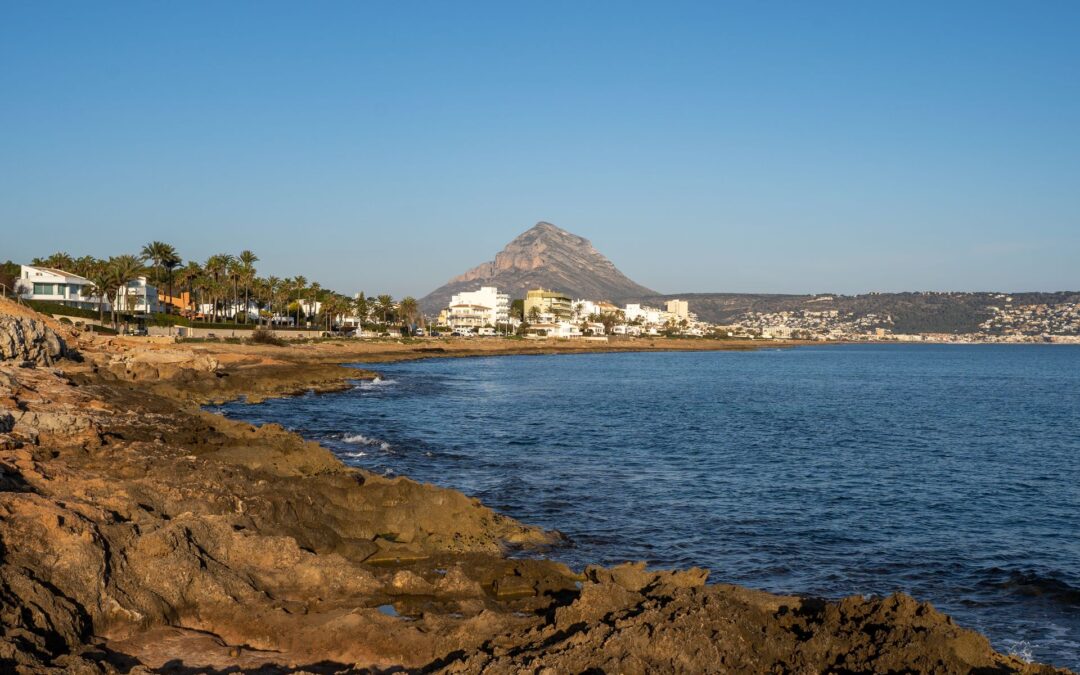
The Costa Blanca has been one of northern Europe’s favourite retirement destinations for decades, and Jávea holds a special place within that tradition. This is no accident. The town offers a combination of factors that are difficult to replicate elsewhere in the Mediterranean, and what began as a trend among British and German retirees in the 1970s and 1980s has become today a fully established international community, with adapted services, active social networks and a quality of life that many describe as the best of their lives.
This guide is written for retirees considering Jávea as a destination for an extended stay or as a place to settle permanently, as well as for family members looking for reliable information to help their loved ones make that decision.
Why Jávea and Not Somewhere Else on the Costa Blanca
The Costa Blanca has many attractive towns for retirees, but Jávea has characteristics that set it apart from alternatives such as Torrevieja, Calpe or Benidorm.
Human scale. Jávea is not a sprawling resort town. With just over 30,000 residents in the off-season, it has all the services you could need without the noise, traffic and anonymity of the larger tourist centres. It is a town where you can live comfortably without feeling lost.
An established international community. Jávea has one of the most deeply rooted expat communities in the entire Valencian Community, particularly from the United Kingdom, Germany and the Netherlands. This translates into a network of adapted services — clinics with English-speaking staff, advisory firms specialising in foreign residents, associations and clubs — and a social life that many retirees arriving alone or as a couple find easier to build than they expected.
Natural surroundings. The Montgó Natural Park, the coves, the viewpoints and the hiking trails make Jávea a destination with a quality of natural environment that the large, crowded tourist centres simply cannot match. For active retirees who enjoy walking, cycling, golf or outdoor activities, this factor carries considerable weight.
Healthcare and services. Jávea has health centres, pharmacies, hospitals within a reasonable distance (the Marina Salud Hospital in Dénia is around 15–20 minutes away) and a range of private clinics adapted to international residents. For European retirees with a European Health Insurance Card or private medical cover, access to quality healthcare is one of the most valued factors when choosing where to live.
The Climate: The Most Obvious Argument, and the Most Real
For someone moving from northern Europe, the climate in Jávea during winter represents a radical improvement in quality of life. While November to March in the United Kingdom, Germany or the Netherlands means cold, damp, darkness and barely eight hours of daylight, Jávea in those same months offers temperatures that rarely drop below 12–15°C, an abundance of clear days and a luminosity with a well-documented positive impact on wellbeing and mental health.
For many European retirees, the decision to spend the winter months in Jávea rather than in their home country is not merely a question of comfort — it is a health decision. Less cold, more outdoor physical activity, better mood and, in many cases, a reduction in symptoms associated with the damp, cold climate of the north.
Summer in Jávea, for its part, is warm but more manageable than in other parts of the Mediterranean, thanks to the moderating effect of the sea and the shelter provided by the Montgó. Evenings and nights are pleasant virtually year-round, which allows an outdoor social life — terraces, evening walks, activities — that the northern climate rarely permits.
Activities and Quality of Life for Active Retirees
Jávea is not a destination for staying indoors. The range of activities available for active retirees is broad and varied, and a good deal of it is organised through the international resident community itself.
Walking and hiking. The trails of the Montgó Natural Park and the viewpoint network along the southern coastline offer walking options for all levels, from gentle 35-minute strolls to multi-hour ascents. For retirees in good physical shape, the Montgó is one of the great attractions of the area.
Golf. The Costa Blanca has several golf courses within half an hour of Jávea, making it a very popular destination for retired golfers from across Europe.
Sailing and watersports. The Jávea Yacht Club has an active year-round community of sailors, with courses and activities that include adult beginners who want to take up sailing or rowing later in life.
Social life and associations. The international community in Jávea has a network of clubs, associations and social activities that makes it genuinely easy for newcomers to integrate. From walking groups to language exchanges, cultural activities to volunteering, the social offer for retirees in Jávea is one of the richest on the Costa Blanca.
Food Food and dining. The restaurants along the port and in the old town, the weekly markets and the municipal covered market offer a gastronomic experience that for many European retirees is one of the great everyday pleasures of life in Jávea.
Are you thinking about spending an extended period of time in Jávea? At Secretos de Jávea, we offer accommodations suitable for stays of one month or longer, with all the amenities needed for a comfortable and peaceful life.
Extended Stay vs. Permanent Residence: Two Different Models
Not all retirees who choose Jávea do so with the same level of commitment. There are essentially two models that coexist in the town, each with its own practical implications.
The winter season (3–6 months). This is the most common model among northern European retirees who want to escape the cold without cutting ties with their home country entirely. They arrive in October or November, spend the winter in Jávea and return home in spring or early summer. For this profile, long-term holiday rental is the most convenient option: no purchase commitment, flexibility to change accommodation or dates from year to year, and the opportunity to try different parts of the town before making any more permanent decisions.
Permanent residence. For those who take the step of making Jávea their full-time home, buying a property is the most common route, though long-term rental also has its place. This model involves additional administrative decisions — registering on the municipal roll, tax residency and so on — that are best handled with the help of a specialist adviser experienced in working with foreign residents.
For anyone considering the move but wanting to “test” Jávea before committing to a purchase, one or several winter seasons in rental accommodation is the most sensible way to make that decision based on real, lived experience.
What to Look for in Accommodation for a Long Stay in Jávea
For a stay of several months, the criteria for choosing accommodation are quite different from those for a week’s holiday. The factors that matter most for this profile are:
Accessibility. For retirees with reduced mobility or difficulty climbing stairs, the accessibility of the property — ground floor, lift, no steps at the entrance — is a priority that should be verified before booking.
Proximity to services. For a stay of several months, being within easy reach of a supermarket, pharmacy, health centre and public transport is far more relevant than it would be for a week’s holiday. The port area and the Arenal, where all essential services are within walking distance, tend to be the preferred locations for this profile.
Heating. Winter in Jávea is mild, but December and January nights can call for heating, particularly in properties with limited thermal mass. Checking that the accommodation has adequate heating is important for winter stays.
Fully equipped kitchen. For stays of several months, cooking at home is a fundamental part of daily routine. A kitchen with all necessary appliances, complete crockery and adequate storage is effectively essential.
Washing machine and internet connection. Both are non-negotiable for long stays. The first for obvious reasons; the second for staying in touch with family, accessing online services and, for many, watching television in their own language.
The Cost of Living in Jávea: More Affordable Than You Might Think
Compared with the cost of living in northern Europe or Spain’s most expensive cities, Jávea offers an excellent balance between quality of life and cost. Long-term rental prices in the off-season are significantly lower than summer rates, food is affordable particularly when shopping at the municipal market or local supermarkets, and the range of restaurants covers a very broad spectrum of prices.
For a European retiree living on a pension from their home country, the cost of living in Jávea tends to be comparable to or lower than in their usual place of residence, with a noticeably better quality of life in terms of climate, surroundings and general wellbeing.
Practical Considerations
Documentation and residency. EU citizens have the right to live in Spain without a visa, though they must register with the Central Register of Foreign Nationals if their stay exceeds three months. For non-EU citizens — including British nationals following Brexit — the conditions are different and it is worth researching the requirements well in advance.
Healthcare. EU retirees with a European Health Insurance Card are entitled to access the Spanish public health system during their stay. For longer stays or permanent residence, many choose to take out private health insurance that also covers treatment at private clinics with English-speaking staff.
Transport. Jávea requires a car for comfortable mobility, particularly for reaching the coves and nearby towns. For retirees who no longer drive, choosing accommodation close to services in the Arenal or port area considerably reduces dependence on a vehicle, though public transport options are limited.
Tax and legal advice. Stays of more than 183 days per year may trigger Spanish tax residency, with implications for income tax. It is important to consult a specialist adviser familiar with expat tax matters before making decisions about the length of your stay.
Jávea offers European retirees something that few Mediterranean destinations can genuinely match: an exceptional climate, a well-established international community, outstanding natural surroundings and a quality of life that improves substantially on what northern Europe offers during the winter months. It is no coincidence that so many retirees who come “just to try it” end up returning year after year — and that many eventually take the step of settling permanently.
If you are considering spending a season in Jávea or looking for information about accommodation for an extended stay, at Secretos de Jávea we are happy to help you find the right option for your needs, with all the information you need to make a well-informed decision.
Frequently Asked Questions About Jávea for Retirees
Is Jávea a good destination for European retirees?
Yes, particularly for those seeking a Mediterranean climate, an established international community, high-quality natural surroundings and a more human scale than the larger tourist centres on the Costa Blanca.
How much does it cost to rent an apartment in Jávea for the winter?
Prices vary depending on the type of property and location, but off-season rentals are significantly lower than summer rates. Booking directly with the property manager gives more scope to negotiate terms for multi-month stays.
Do I need a car to live in Jávea as a retiree?
t depends on where you are based. In the Arenal and port area, essential services are within walking distance. For trips to coves, neighbouring towns or golf courses, a car is effectively necessary.
Are there English-speaking doctors in Jávea?
Yes. The established international community has generated a supply of private medical services with English-speaking staff. The Marina Salud Hospital in Dénia, around 15–20 minutes away, also has experience treating international patients.
Is Jávea safe for foreign retirees?
Yes. Jávea is a peaceful town with low crime rates and a long tradition of harmonious coexistence between the local population and its international residents.
Image: Rafael Minguet Delgado at Pexels

